Switchblade 600 SOP: Infantry Tactical Integration Guide 2026
Standard Operating Procedure for integrating the SB600 Switchblade into infantry squads. Covers RSTA, Terminal Strike, and EW contingency protocols for 2026.
SWITCHBLADE 600
Aegis Warfare Team
1/8/20263 min read
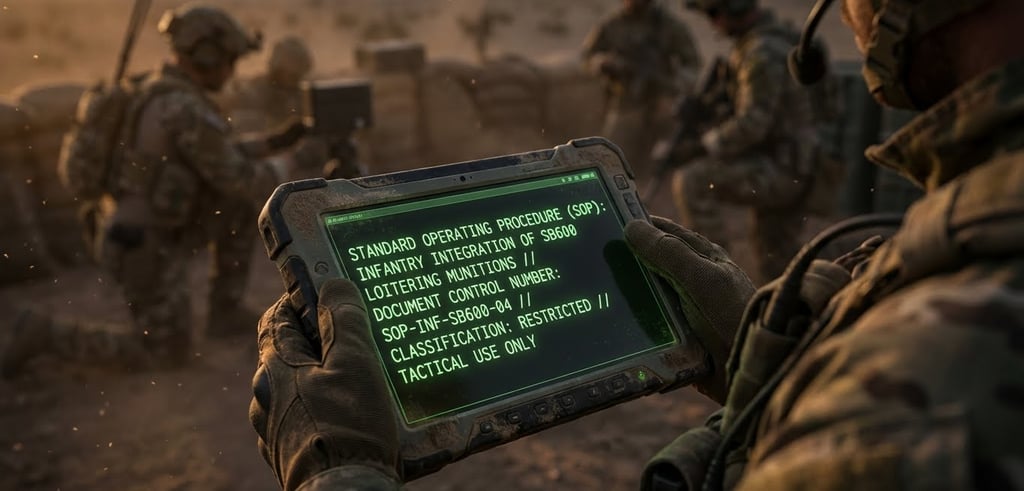
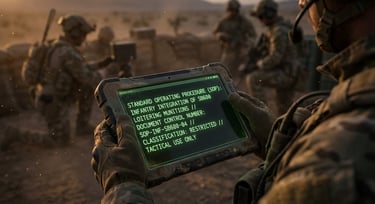
Standard Operating Procedure (SOP): Infantry Integration of SB600 Loitering Munitions
Document Control Number: SOP-INF-SB600-04
Classification: RESTRICTED // TACTICAL USE ONLY
Applies to: Platoon-level and Company-level UAS Operators/Infantry Squads
1. Purpose
To establish a standardized framework for the transport, deployment, and tactical integration of the Switchblade 600 (SB600) into organic infantry operations to achieve long-range, precision-strike capability without external fire support.
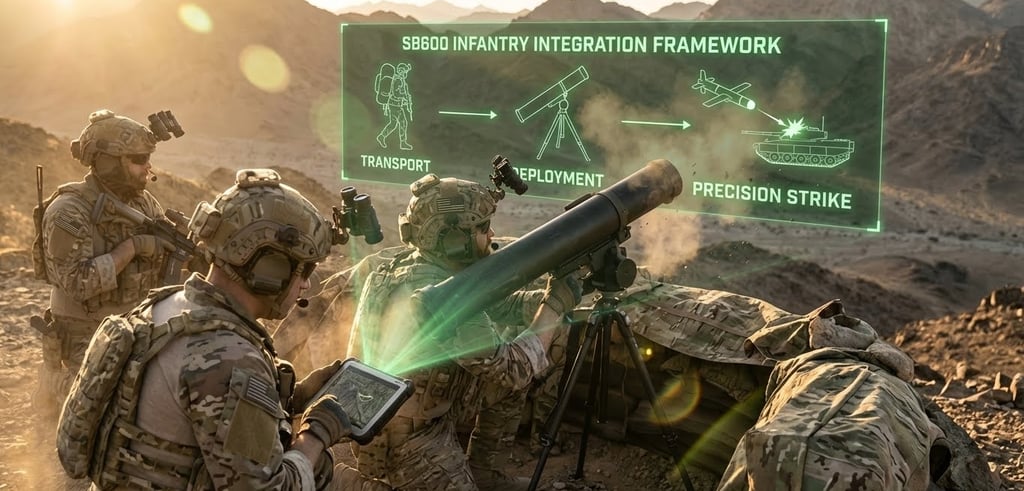
2. Personnel & Loadout
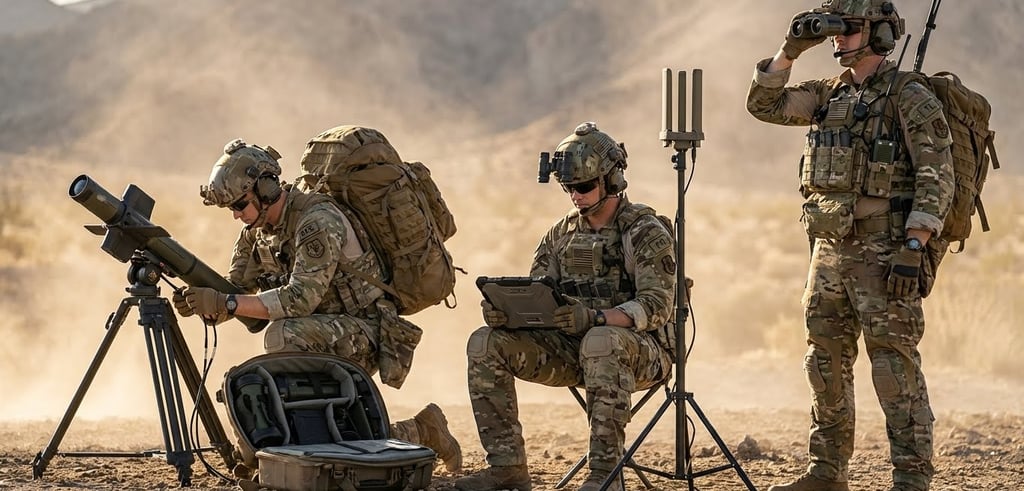
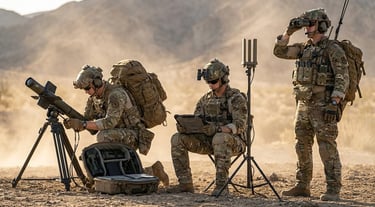
The SB600 is a "man-portable" but heavy system. Effective integration requires a dedicated UAS Strike Team (3 Personnel):
Team Leader (TL): Oversees airspace deconfliction, coordinates with higher HQ (C2), and designates high-value targets.
Pilot/Operator (PO): Operates the Ground Control Station (GCS) and executes the terminal strike.
Mission Specialist (MS): Responsible for the physical setup of the launcher, security of the launch site, and technical troubleshooting.
Loadout Distribution:
PO: GCS, Antenna/Data Link, and personal weapon.
MS: Launch Tube (AUR - All Up Round) and tripod.
TL: Extra batteries, thermal spotting optics, and communication gear.
3. Pre-Deployment: The "Hot-Start" Protocol
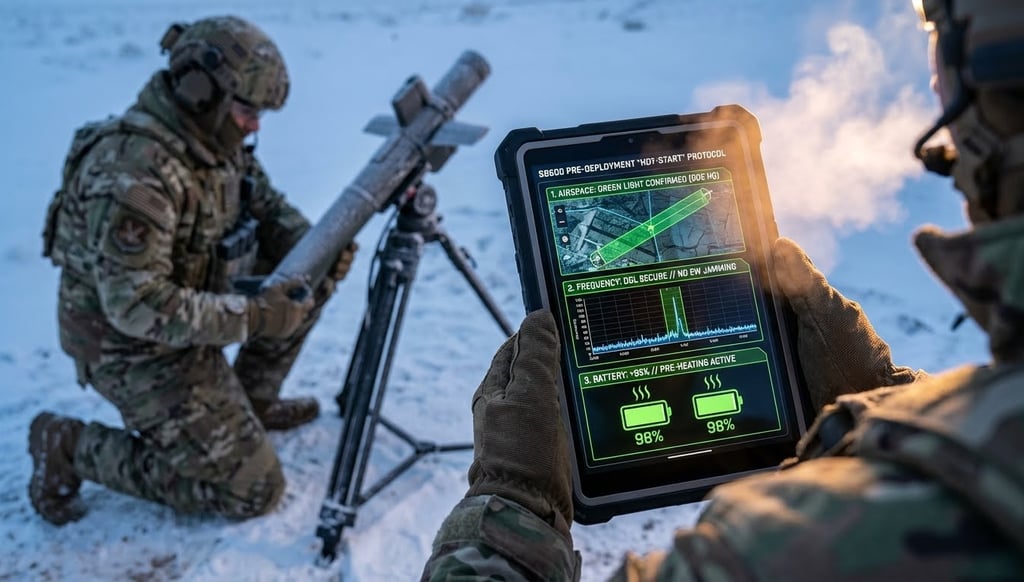
Before engaging, the team must ensure the following steps are met to minimize "time-to-launch" (TTL):
Airspace Clearance: Confirm "Green Light" from Battalion/Brigade air-space managers to avoid fratricide with friendly rotary-wing or ISR assets.
Frequency Management: Select a clear DDL (Digital Data Link) frequency to avoid interference with friendly EW (Electronic Warfare) bubbles.
Battery Verification: Ensure the munition and GCS report >95% battery life. Cold-weather operations require pre-heating battery packs.
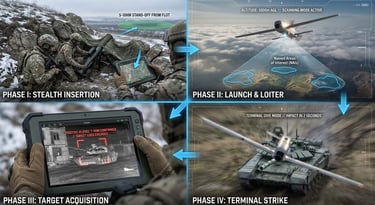
4. Phases of Engagement
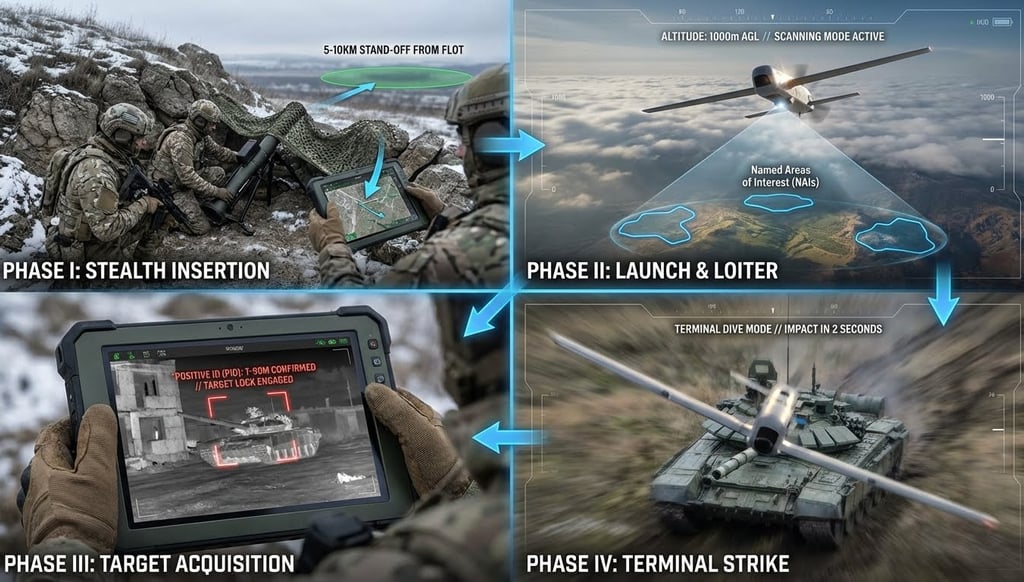
Phase I: Stealth Insertion & Site Selection
Launch Site: Must be behind hard cover or in a depression to mask the launch signature (flash/smoke).
Stand-off: Ideally 5–10 km behind the Forward Line of Own Troops (FLOT) to remain outside of enemy mortar/FPV range.
Orientation: Align the tube within 30° of the predicted target vector to minimize energy expenditure during the climb phase.
Phase II: Launch and Loiter (RSTA Phase)
Launch: Execute tube launch; PO confirms wing deployment and motor ignition.
Climb: Ascend to "Transit Altitude" (typically 500–1,000m AGL) to maximize sensor FOV and minimize acoustic detection.
Scanning: Use the EO/IR gimbal to scan "Kill Zones" or "Named Areas of Interest" (NAIs).
Phase III: Target Acquisition & Confirmation
Positive ID (PID): The TL must confirm target identity (e.g., T-90M, Electronic Warfare vehicle, Command Post).
Verification: Check for collateral damage risks (civilians/friendly proximity).
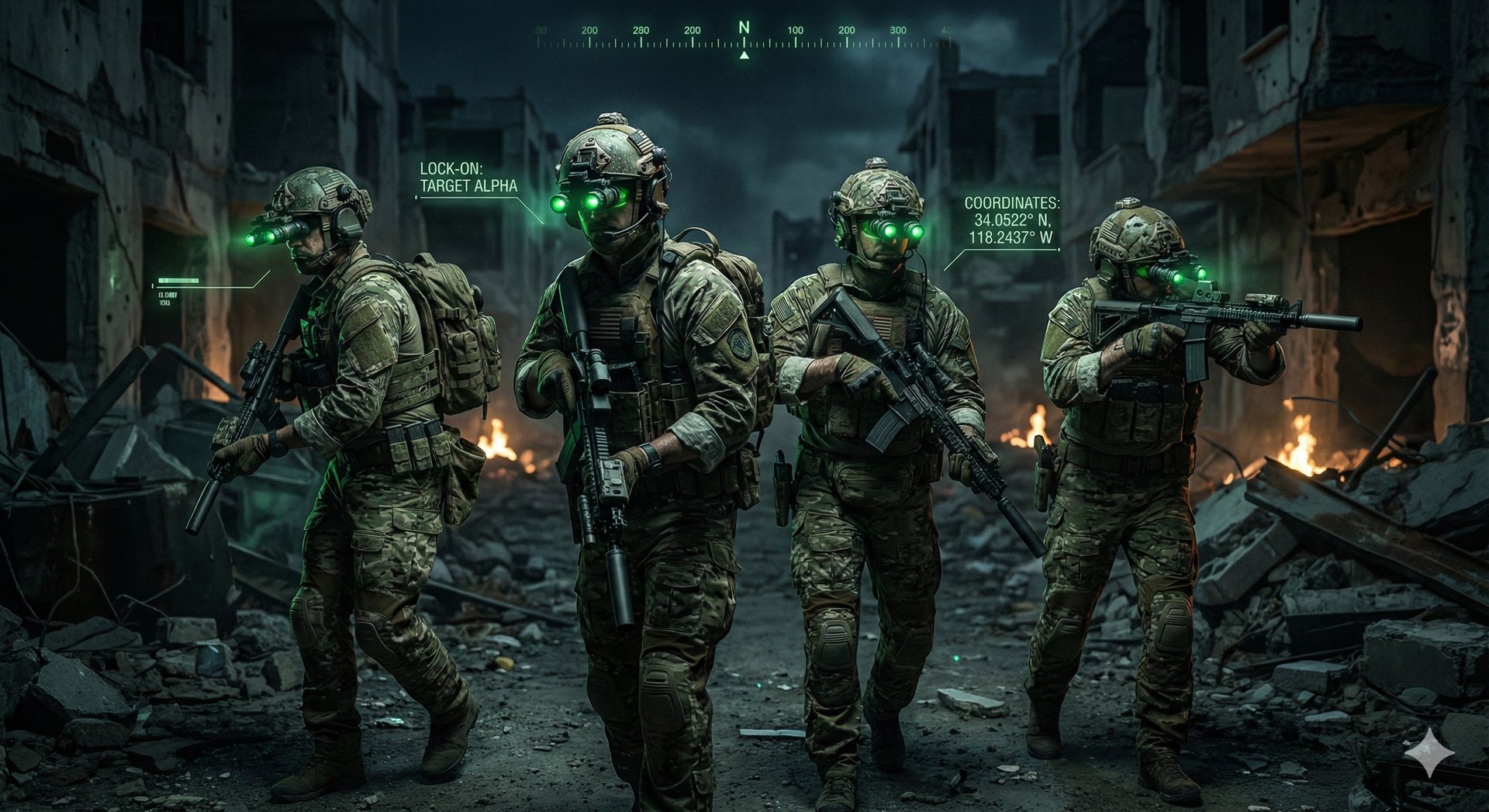
Lock-on: PO engages "Target Lock." The SB600 transitions from loiter mode to terminal dive mode.
Phase IV: Terminal Strike (The "Kamikaze" Run)
Dive Angle: High-angle (top-down) is preferred for armored targets to exploit thin turret/engine roof armor.
Wave-off Capability: If the target moves into a "No-Strike" zone, the PO must be prepared to abort the dive and return to loiter (fuel permitting).
Impact: PO maintains "man-in-the-loop" control until impact to correct for windage or target movement.
5. Post-Strike Actions (BDA & Displacement)
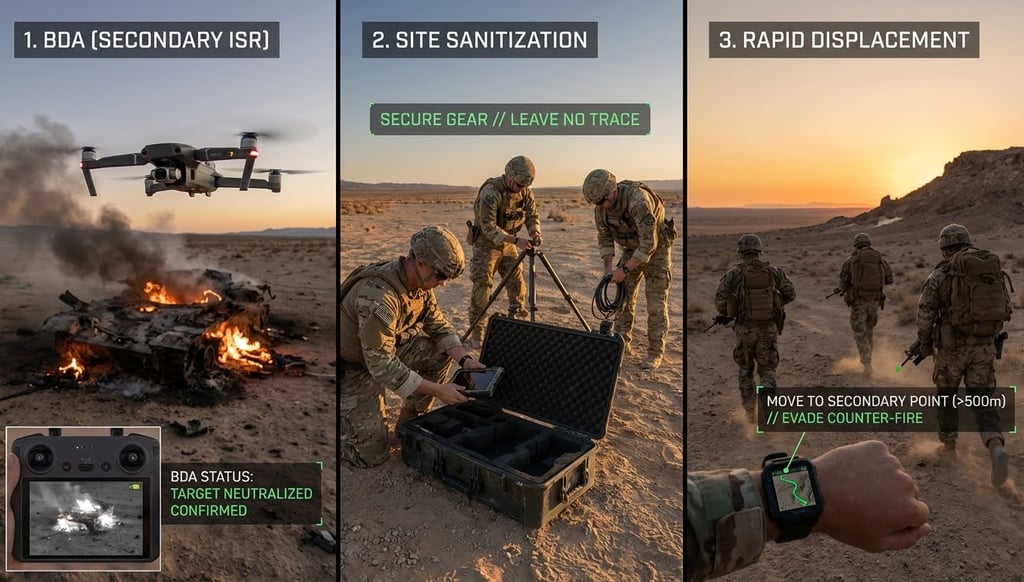
Battle Damage Assessment (BDA): Use secondary ISR (e.g., a DJI Mavic or Puma) to confirm the target is neutralized.
Site Sanitization: Pack the reusable GCS and tripod. Leave no sensitive electronic components or packaging behind.
Rapid Displacement: Move to a secondary location immediately (minimum 500m) to avoid enemy counter-battery fire or "direction-finding" (DF) sweeps.
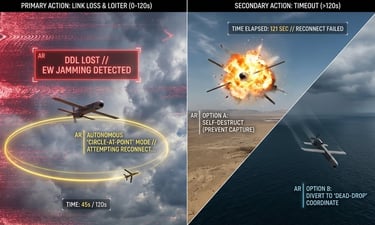
6. Contingency: EW Interference & Link Loss
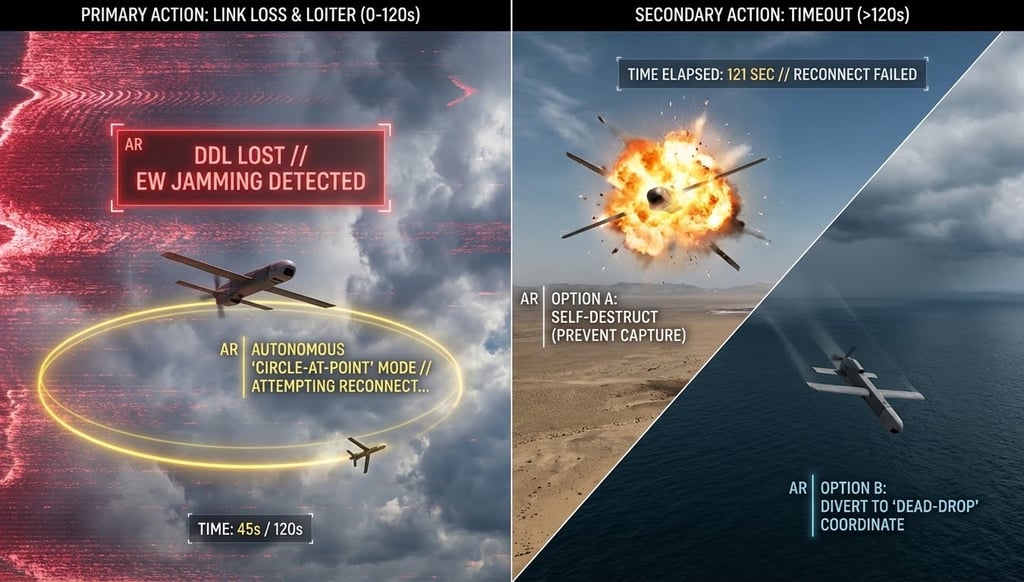
Primary Action: If DDL is lost, the SB600 will automatically enter a "Circle-at-Point" loiter pattern while attempting to re-establish the link.
Secondary Action: If the link is not restored within 120 seconds, the munition is programmed to self-destruct or fly to a pre-designated "Dead-Drop" coordinate to prevent enemy capture of the technology.
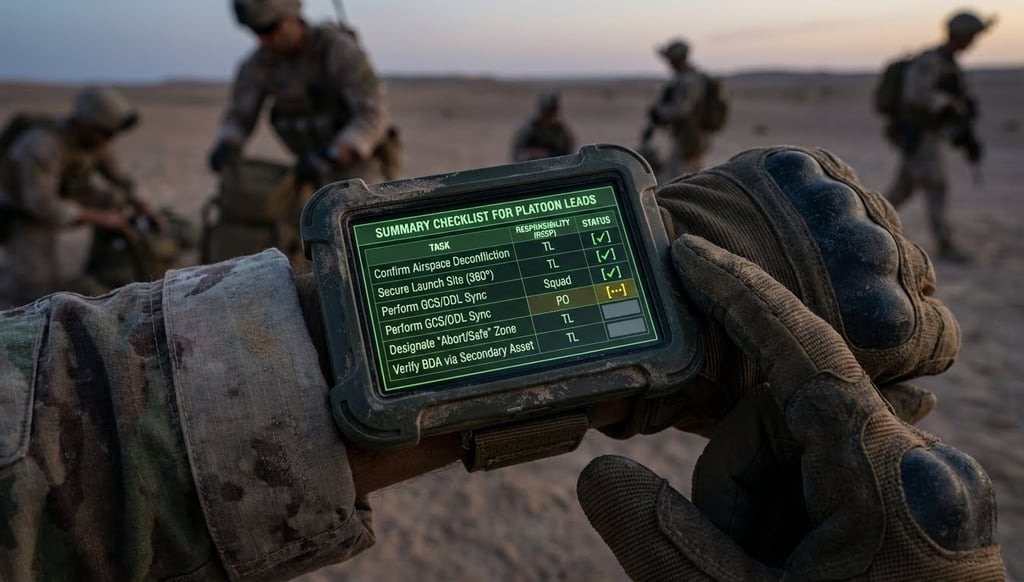
7. Summary Checklist for Platoon Leads