Battlefield Visualization 2026: NVGs vs Thermal Imaging SOP
Master night combat with our 2026 guide on NVGs ($I^2$), Thermal Imaging (LWIR), and counter-detection tactics. Learn to disappear from advanced thermal sensors.
Aegis Warfare Team
1/17/20264 min read


Technical Analysis: Battlefield Visualization and Counter-Detection Strategies
I. Fundamental Physics: The Science of Seeing the Invisible
To understand the differences between these technologies, one must first understand the Electromagnetic (EM) Spectrum. Human vision is limited to a narrow band between 380nm and 750nm. Military sensors exploit the regions beyond this.
1. Night Vision (Image Intensification - $I^2$)
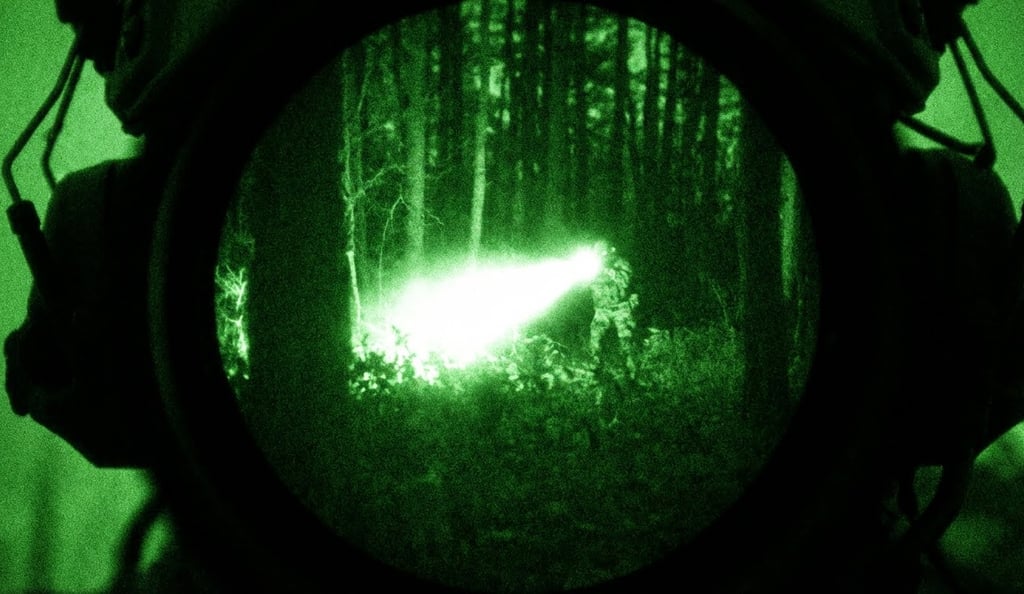
Night vision does not "create" an image from nothing; it amplifies existing light.1
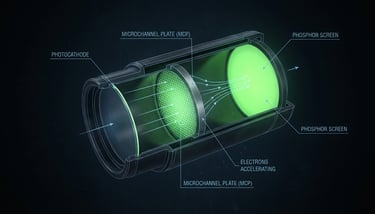
Wavelength: Operates primarily in the Visible and Near-Infrared (NIR) spectrum (approx. 700nm to 1000nm).
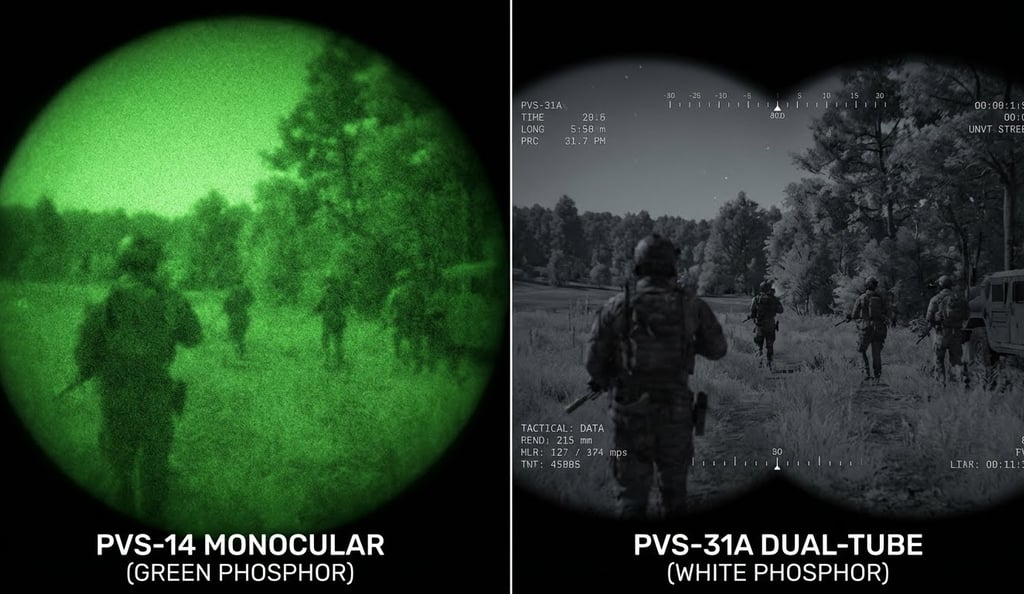
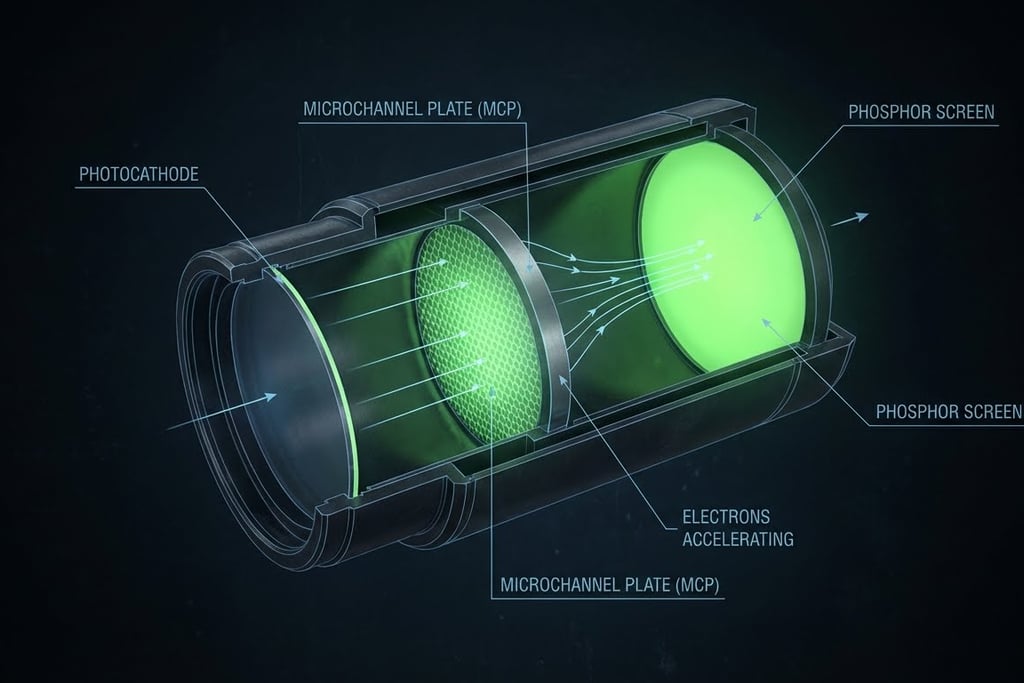
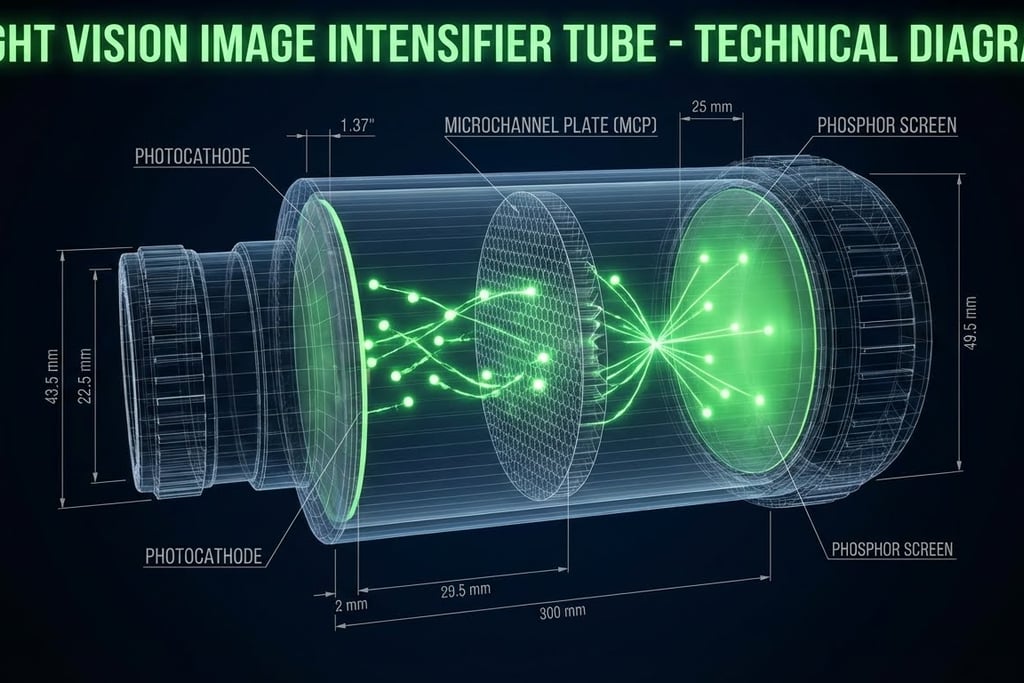
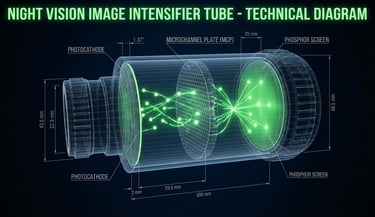
The Process: Photons enter the device and hit a photocathode, which converts them into electrons.2 These electrons are accelerated through a Microchannel Plate (MCP), striking a phosphor screen (traditionally green, now often white) to recreate the image.
Constraint: It requires "ambient" light (starlight, moonlight).3 In a deep cave with zero photons, $I^2$ is blind without an active IR illuminator.
2. Thermal Imaging (Long-Wave Infrared - LWIR)
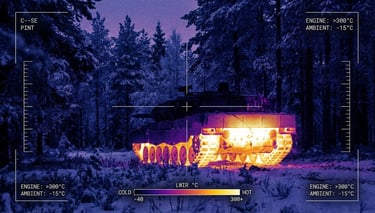
Thermal imaging ignores light entirely and detects emitted heat.4
Wavelength: Operates in the Mid-Wave (MWIR) and Long-Wave (LWIR) bands (3μm to 14μm).5
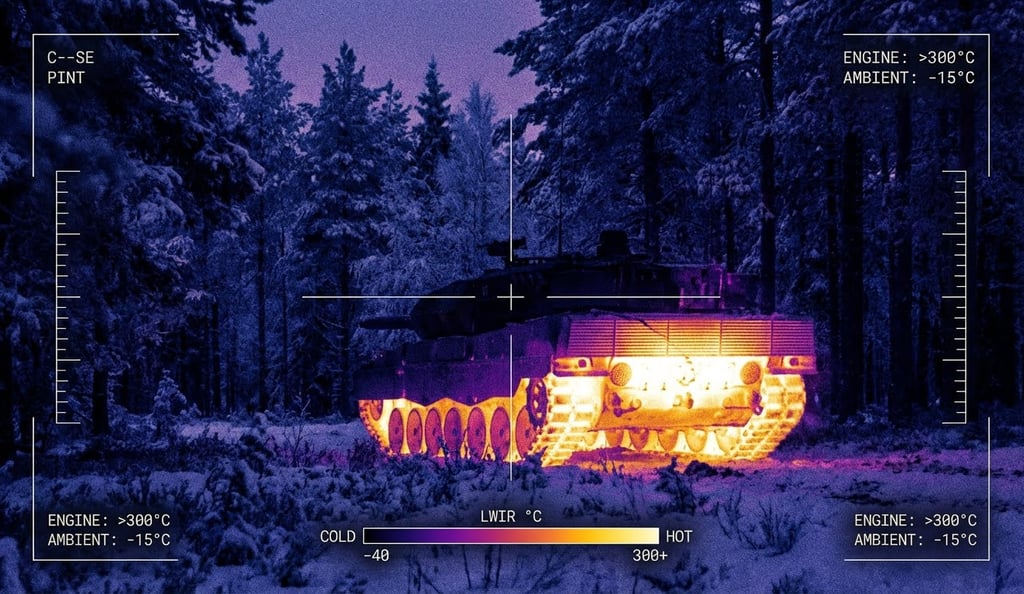
The Process: Every object with a temperature above absolute zero emits infrared radiation.6 Thermal sensors (Microbolometers) detect these tiny differences in temperature—often as small as 0.01°C—and translate them into a "thermogram."7
Capability: It works in 100% total darkness and can see through smoke, dust, and light foliage.8
3. Infrared (The "Bridge" Category)
Infrared" is often used loosely, but in a technical military context, it usually refers to Active IR.
Active IR: A device (like a security camera or older NVGs) that shines an "invisible" IR flashlight.9 The sensor then sees the reflection.
Tactical Risk: Using Active IR is like turning on a flashlight in a dark room; anyone else with a night vision device can see your IR beam from miles away, making you a "beacon."
II. Generational Evolution of Night Vision
Military 11$I^2$ technology is categorized by "Generations."12
III. Best-in-Class Military Devices (2025-2026)
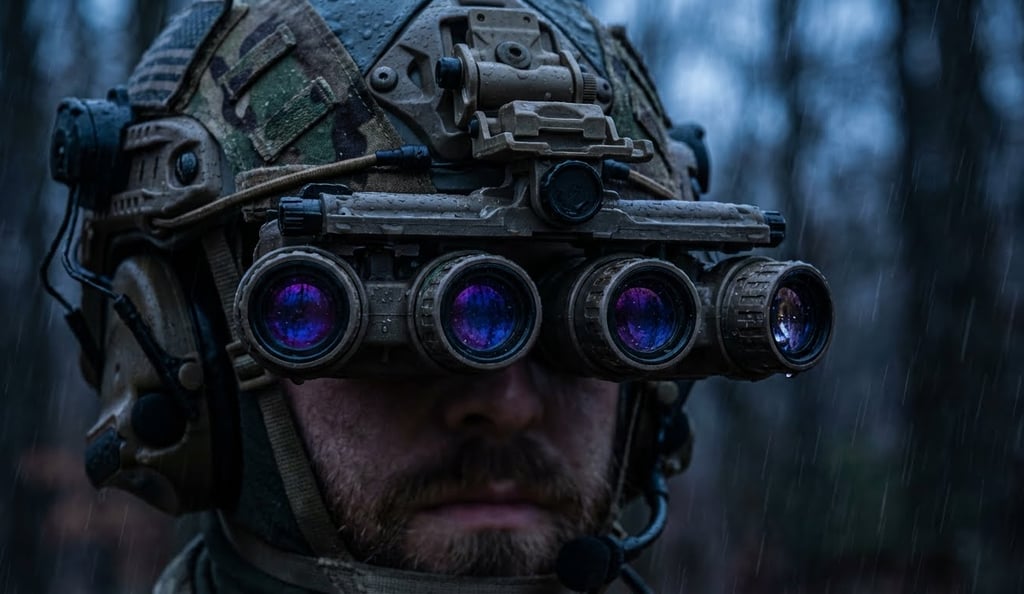
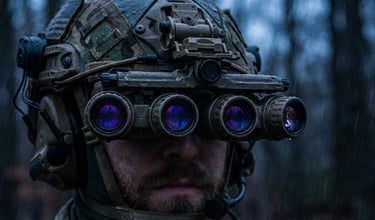
1. The "Gold Standard" Night Vision: L3Harris GPNVG-18
The Ground Panoramic Night Vision Goggle is the most famous device in Tier 1 units (DEVGRU, Delta).
Field of View (FOV): 97 degrees (compared to the standard 40 degrees). It uses four tubes to provide a panoramic view, preventing "tunnel vision."
Resolution: Typically 64-72 lp/mm with White Phosphor (Unfilmless).
2. The Best Thermal Weapon Sight: Trijicon REAP-IR / BAE Systems OASYS
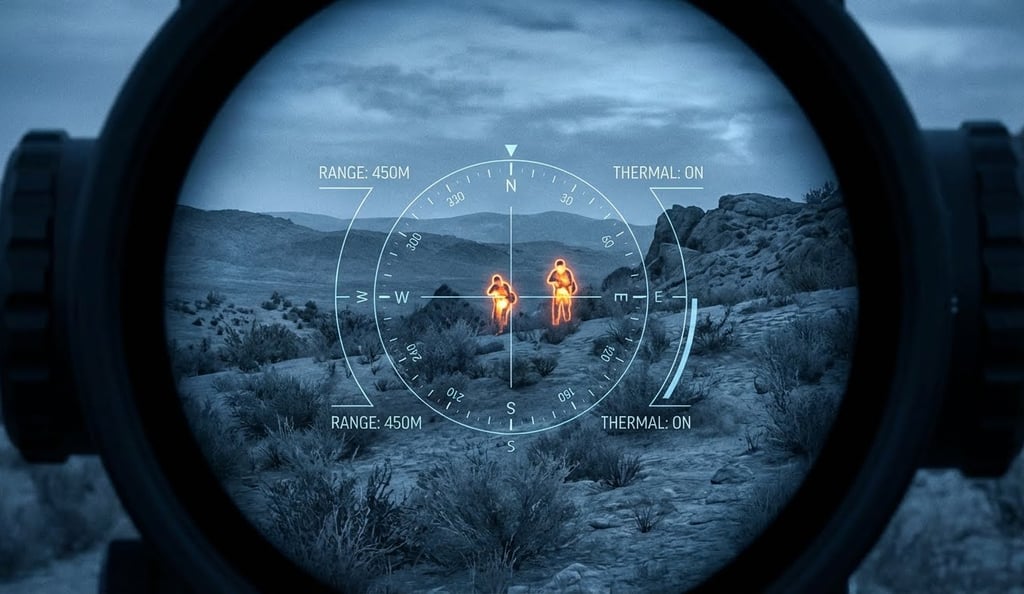
Sensor: 640x480 resolution with a 12-micron pixel pitch.
Performance: Can detect human-sized targets at over 2,000 meters. It features "edge detection" modes to highlight targets in cluttered environments.
3. The Future: Fused Systems (ENVG-B)
The Enhanced Night Vision Goggle-Binocular (ENVG-B) is the pinnacle of current tech. It fuses $I^2$ and Thermal into one image.
Why it wins: You get the high-detail navigation of night vision plus the "thermal glow" of a hidden enemy. It uses AR (Augmented Reality) to overlay maps and blue-force tracking directly onto the lens.13
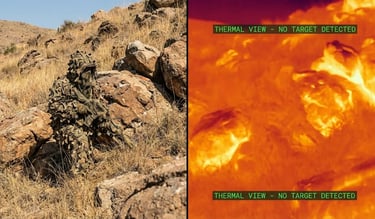
IV. Tactics to Avoid Thermal Detection
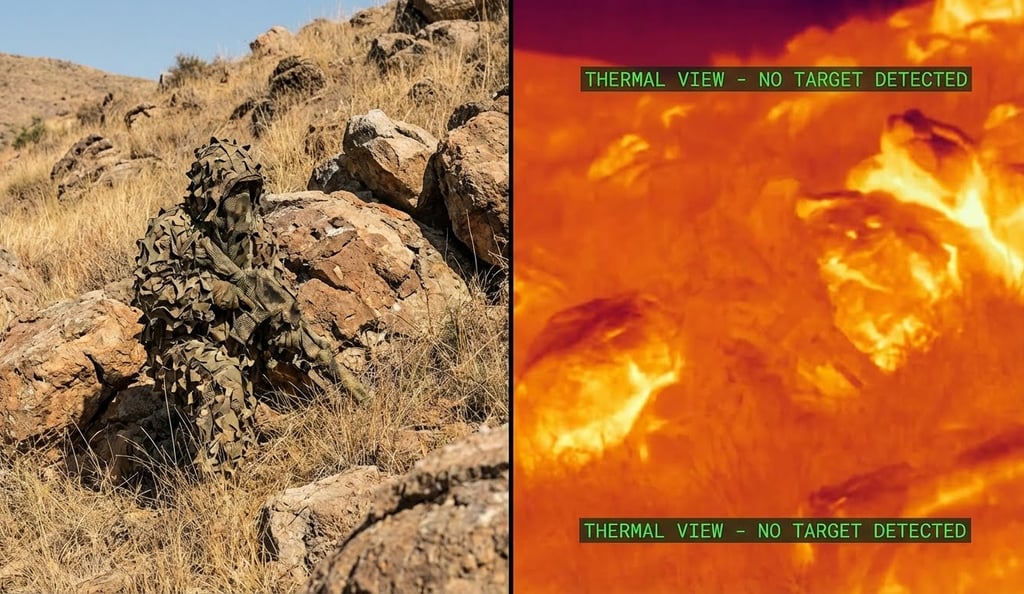
Thermal imaging is the most dangerous threat on the modern battlefield because it is passive (it doesn't emit signals) and all-weather.
1. Environmental Blending (The "Background" Tactic)
Thermal sensors look for contrast.14 If the background is 20°C and you are 37°C, you glow.
The Enhanced Night Vision Goggle-Binocular (ENVG-B) is the pinnacle of current tech. It fuses $I^2$ and Thermal into one image.
Why it wins: You get the high-detail navigation of night vision plus the "thermal glow" of a hidden enemy. It uses AR (Augmented Reality) to overlay maps and blue-force tracking directly onto the lens.13
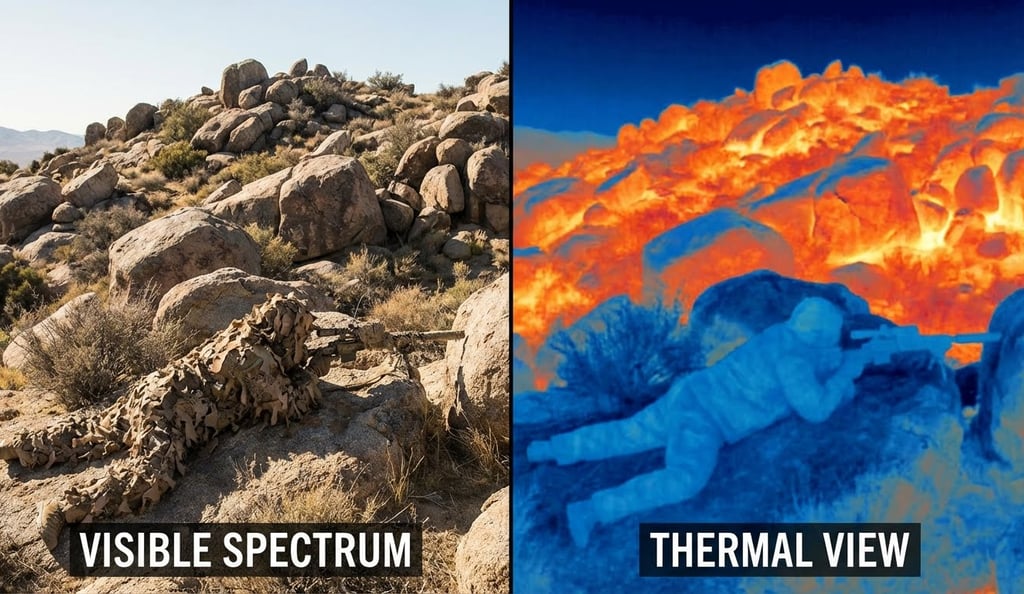
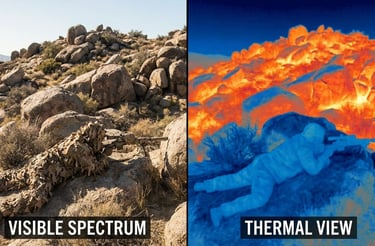
Thermal Inertia: Move near objects that retain heat similarly to the human body (e.g., sun-warmed rocks, concrete walls, or running engines).15
The "Mud" Myth: Mud cools the skin for a few minutes, but as it dries, your body heat warms the mud, and you become visible again. It is a very short-term emergency tactic.